In 1979, when Michael Aldrich invented Electronic shopping, no one thought it would be worth trillions of dollars in 2024 to 2025. From its humble journey since then to its highly sophisticated e-marketplaces in the contemporary period, eCommerce has come a long way. Today, there are a mammoth 26.5 million eCommerce websites globally with an estimated 6+ trillion US dollars in sales. The USA alone powers 14 million ecommerce stores. At first glance, the data is extremely pleasing when considering the prospects for ecommerce businesses, but it poses a rare challenge for new entrants in the field. How on earth are they going to compete with something on this scale?
Millions of similar products, thousands of similar SKUs, n+ number of competitive websites, deep-pocket e-commerce giants, and every day changing dynamics of the online marketplaces can be overwhelming for ecommerce businesses (both existing and aspiring ones).
But every dilemma has a solution. This is where ecommerce businesses need ‘data’. If they know what their competitors are selling, which products sell the most, and how are they priced? What is the metadata on these products, and what level of ongoing interest is shown by shoppers on particular products? And finally, what are the reviews? With such data in hand, ecommerce businesses can develop their product positioning, pricing strategies, and online marketing for their products.
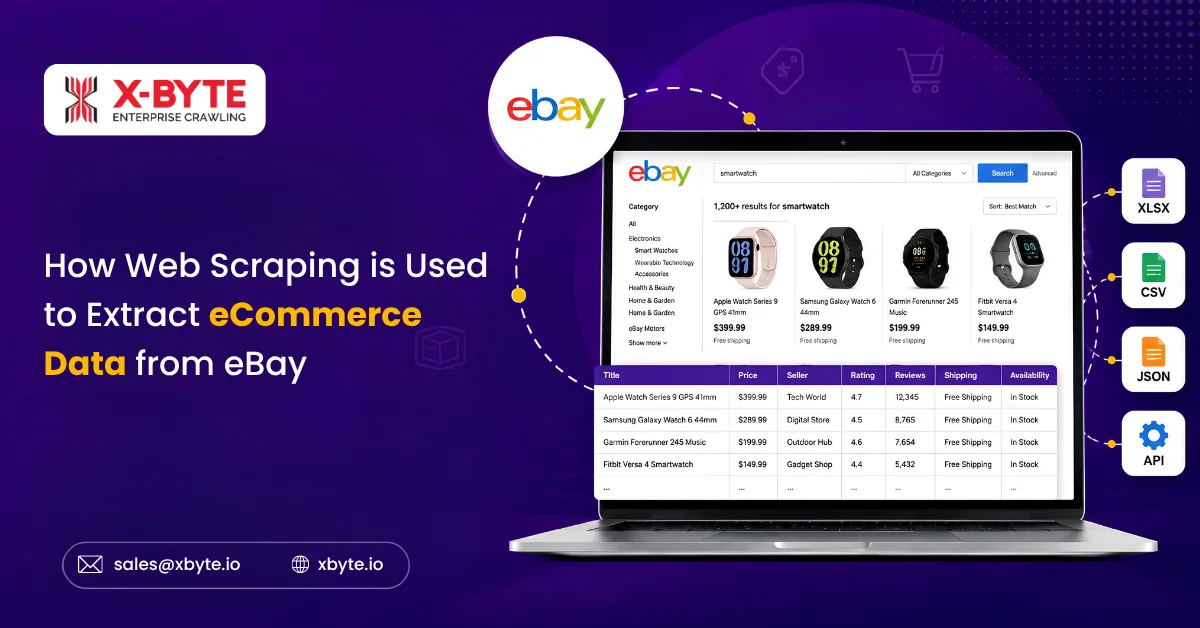
The best part is that most of the data that ecommerce businesses will need is available online. They only need a method to extract the data. This is where ecommerce data scraping comes into the picture. Web scraping ecommerce websites helps ecommerce websites collect the required data that can be used for competitor analysis. Continuous web scraping uses a web scraping tool, predefined algorithms to scrape data, and a mechanism for tabulating data in a structured form.
This guide details all aspects of ecommerce data scraping, its use, methods, tools, data touchpoints, and more. The guide also analyzes the key challenges faced in web scraping ecommerce websites and suggests their solutions. Finally, we have also explored the benefits of ethical and legal ecommerce data scraping.
Let us understand the world of ecommerce web scraping together: