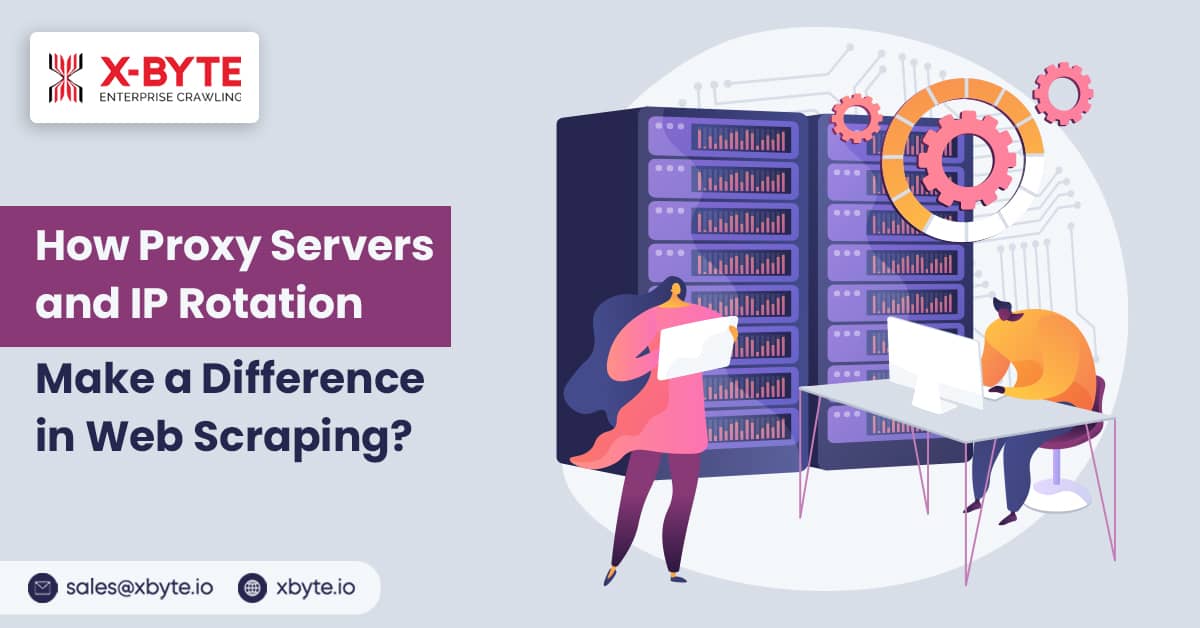
Web Scraping is a robust technique for extracting valuable information from websites, offering unparalleled access to diverse data sources. But, some things could be improved when you try to do it. Things like getting your IP banned, being limited in how fast you can scrape, or facing restrictions on what you can access can make it challenging.
You can use tricks to make web scraping work better and smoother. One uses proxy servers, intermediaries between your scraper and the website. They hide your identity, so you’re less likely to get banned. Another trick is IP rotation. This means changing your device’s “address” regularly during scraping. Doing these things helps you avoid problems and makes web scraping work well.
In this blog, we will delve into the concepts of proxy servers and IP rotation and how to seamlessly integrate them into your web scraping solutions.
What is a Scraping Proxy?
The scraping proxy is a proxy that is mainly built to allow web scraping operations. In layman’s terms, it acts as a server between your computer and the website you’re attempting to scrape.
When you use a proxy server for web scraping, the requests made by your scraper are forwarded to a pre-decided proxy server and then forwarded to the targeted website. This way, the website interprets your computer’s request as originating through the proxy server, which helps you hide your location and IP address. This is an effective way to protect your identity and avoid any potential censorship or discovery.
What is IP Rotation?
IP rotation in web scraping is a method of routinely changing a device or connection’s public-facing IP address. It is used in networking and online activities such as web scraping. The primary objective is to avoid limitations or limits imposed by websites based on IP addresses. Web scraping websites may restrict the number of queries they get from a single IP address; if you submit too many, your account may be blocked. By routinely changing the IP address, IP rotation helps get around this and avoids bans or limitations.
Websites may use techniques to manage or limit the amount of requests from a single IP address. A scraper sending too many queries quickly may activate anti-scraping algorithms, resulting in IP bans or temporary limits. IP rotation addresses these concerns by changing the IP address used to make requests regularly.
Why Do Web Scrapers Need to Use a Proxy?
Proxy Servers for scraping can be beneficial for different reasons. This is particularly valuable when dealing with websites that implement stringent anti-scraping measures or those that may block specific IP addresses. These include:
IP Blocking Avoidance
Most of the anti-bot systems use IP blocking to prevent automated queries from bots. But when they identify suspicious requests from a specific IP address, they permanently or temporarily block them. A proxy automatically allows the server to swap between various IP addresses required for requests.
Protect User Privacy
Hide your location, IP address, and other personally identifiable data. It is essential if you want to keep the IP address anonymous and preserve its reputation while scraping.
Get Beyond Geographic Constraints
Certain websites limit access to particular countries and modify their content according to the user’s location. By using a proxy located in one country instead of another, users can get around these restrictions and visit the target website from any location in the world.
Types of Proxies for Web Scraping
Based on the requirements, experts use various sorts of Proxy Servers for scraping. Each kind serves a distinct purpose, and the best one for your scrapping job is determined by the project’s needs. Here are the primary types of scraping proxies:
1.Datacenter Proxies
Proxy servers located within a datacenter are used to build datacenter proxies. For those who are unfamiliar with the phrase, a data center is a location that holds networking hardware, computer devices, and servers for the processing and storing of data.
These proxies give IP addresses not affiliated with ISPs (Internet Service Providers) or household devices. This implies that they appear more suspect than standard IP addresses, and these are more easily detected and blacklisted. As a result, they are appropriate for data scraping from websites without rigorous anti-scraping procedures.